
Medford doesn’t get hit by hail often. Compared to the Midwest or High Plains, Southern Oregon is relatively sheltered—our geography and climate mean severe hail events are infrequent. But infrequent doesn’t mean never, and when hail does fall in the Rogue Valley, it can cause surprising damage to vehicles caught outside.
The challenge with hail damage is that many drivers don’t take it seriously. Because dents from hail are shallow and paint often stays intact, it’s easy to dismiss them as cosmetic. But hail damage affects resale value, can compromise paint protection over time, and is typically covered by comprehensive insurance—meaning many repairs cost nothing out of pocket beyond your deductible.
When Hail Hits the Rogue Valley
In Southern Oregon, hail events tend to occur during late spring and early summer thunderstorms—typically May through July. The Rogue Valley’s geography creates conditions where afternoon convective storms can develop quickly, sometimes producing hail before drivers have any warning. That’s what makes hail particularly frustrating: your car can go from fine to damaged in the time it takes to run an errand.
Unlike states where severe hail is an annual certainty, Southern Oregon can go a year or two without a significant event—then get hit unexpectedly. The June 2023 storm that produced quarter-sized hail near Medford is a good example of how quickly conditions can develop in our area. Drivers parked at work, at the store, or on the street had no opportunity to find cover.
Higher elevations around the valley—areas along Highway 62 toward Crater Lake, the Applegate, or up toward Ashland—can experience hail even when Medford proper stays dry. If you drive through these areas regularly, your vehicle may encounter hail more often than city residents.

Understanding What Hail Does to Your Vehicle
Hail damage looks different from collision damage. Rather than sharp creases and torn metal, hail leaves shallow, rounded dents scattered across horizontal surfaces—hoods, roofs, trunk lids, and sometimes fenders. The size and depth of dents corresponds to the size of hailstones. Pea-sized hail might leave barely noticeable marks, while quarter-sized or larger stones create clearly visible depressions.
Paint often survives hail impacts intact, which is why many drivers underestimate the damage. But even without cracked paint, those dents are real—and they’re affecting your vehicle’s appearance and value. On vehicles with softer aluminum body panels (increasingly common on newer vehicles), hail damage can be more pronounced than on traditional steel.
In severe hail events with large stones, paint does crack and chip. When paint is broken, the same rust clock we see with collision damage starts ticking. Southern Oregon’s wet winters mean any exposed metal from hail damage needs attention before rainy season arrives.
The Best Repair Option: Paintless Dent Repair
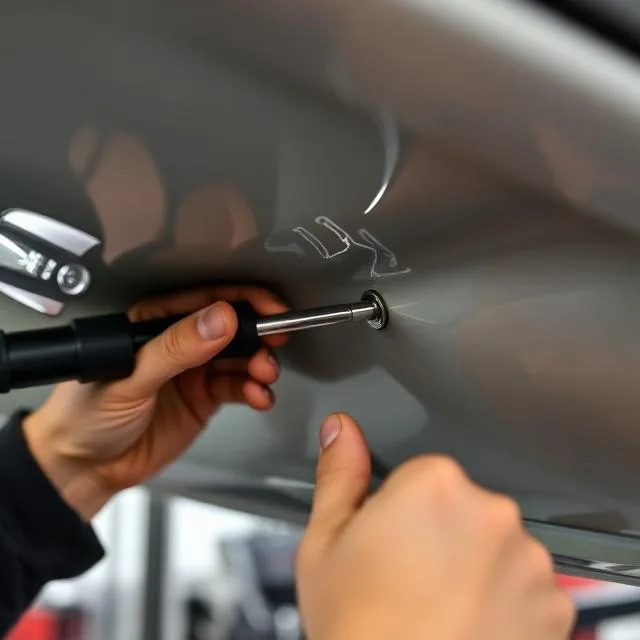
When hail damage leaves paint intact, Paintless Dent Repair (PDR) is almost always the preferred repair method. PDR involves trained technicians using specialized metal rods and picks to massage dents out from behind the panel, restoring the original surface without any filler, sanding, or repainting.
The advantages over traditional body repair are significant. PDR preserves your factory paint—which is both the highest-quality finish your vehicle will ever have and an important factor in resale value. It’s also faster, typically taking one to three days even for extensive hail damage, compared to a week or more for traditional repairs. And it costs considerably less, which matters even with insurance coverage because it affects claim amounts and your deductible impact.
PDR does have limits. It works best when paint is undamaged and dents aren’t too sharp or deep. Very large dents, damage on panel edges, or areas where paint has cracked will require traditional body repair techniques. An experienced technician can assess your specific damage and tell you honestly which approach—or combination—is appropriate.
Using Your Insurance for Hail Damage
Hail damage is covered under comprehensive insurance—not collision. This distinction matters. Comprehensive coverage handles damage from events outside your control, including weather, falling objects, and vandalism. Filing a hail claim does not affect your rates the same way an at-fault collision claim might, since the damage wasn’t caused by your driving.
The process works like any other claim. You report the damage to your insurer, an adjuster inspects the vehicle (sometimes virtually using photos), approves a repair amount, and you pay your deductible. Many hail repairs cost $1,500 to $4,000 depending on severity and vehicle size—well above most deductibles, making insurance use worthwhile.
One important consideration: file promptly. Insurance companies can question whether damage occurred in a specific storm if you wait too long. Document the damage with photos and report it within a few days of the event. If you’re not sure whether you have a qualifying hail event, a free inspection from a reputable body shop can help you assess and document the damage before contacting your insurer.
Assessing Your Vehicle After a Hail Event
After a hail event, inspect your vehicle carefully in good lighting—ideally indirect sunlight or bright overcast conditions, which show surface imperfections better than direct sun. Check all horizontal surfaces first: the hood, roof, and trunk lid take the most direct hits. Then look at fenders, side mirrors, and the tops of door panels.
Run your hand lightly across the hood and roof. Your fingertips can feel dents that aren’t easily visible. Check for any areas where paint appears cracked or chipped, which indicates more severe impact. Look closely at the windshield and windows for chips or cracks—hail can damage glass too, and this is handled separately from body damage in most insurance claims.
If you suspect damage but aren’t sure of the extent, bring it in. Hail damage can be subtle, and what looks like a few minor dents might be more widespread under professional lighting. We provide free hail damage inspections and can give you an accurate picture of what repairs involve before you decide how to proceed.
Protecting Your Vehicle When Storms Threaten
The best hail damage is the kind that never happens. When Southern Oregon thunderstorms are forecast—particularly during late spring and early summer—a few simple steps can protect your vehicle. If you have a garage, use it during storm season. A covered parking structure, carport, or even a thick moving blanket draped over a vehicle parked outside can reduce damage significantly.
Watch the National Weather Service forecasts for the Rogue Valley during late spring. The Medford NWS office issues severe thunderstorm watches and warnings that often include hail size estimates. When warnings are issued, move your vehicle to covered parking if at all possible.
If you’re caught in a hail storm while driving, pull under an overpass or covered structure if safe to do so. If no cover is available, angle your vehicle so the windshield faces into the storm—windshields are reinforced and handle impacts better than side windows and body panels.
Free Hail Damage Inspection in Medford
If your vehicle has been caught in a hail storm, don’t guess about the damage. Rogue Auto Body provides free hail damage inspections to help you understand what you’re dealing with, what repair options are available, and whether an insurance claim makes sense for your situation.
Our technicians are experienced with both PDR and traditional repair, so we can recommend the right approach for your specific damage. We work directly with all major insurance companies and can help you through the claims process from inspection to finished repair.
☎ (541) 770-2557 • 📍 943 Automation Way Suite K, Medford, OR 97504 • 🌐 rogueautobody.com