
Southern Oregon winter car prep is genuinely different from what drivers elsewhere need to think about. Medford’s location in the Rogue Valley creates a climate that doesn’t fit neatly into any single category — mild enough on the valley floor that many residents underestimate winter risk, but severe enough on the surrounding passes and mountain routes that being unprepared can leave you stranded, cited, or in a collision. The combination of Siskiyou Summit at 4,310 feet, the Rogue Valley’s freeze-thaw pattern, black ice on I-5 overpasses, and fall wildfire ash getting locked into paint scratches by winter rain creates a specific checklist that every Medford-area driver should run through before November.
Southern Oregon Winter Car Prep Starts With the Passes
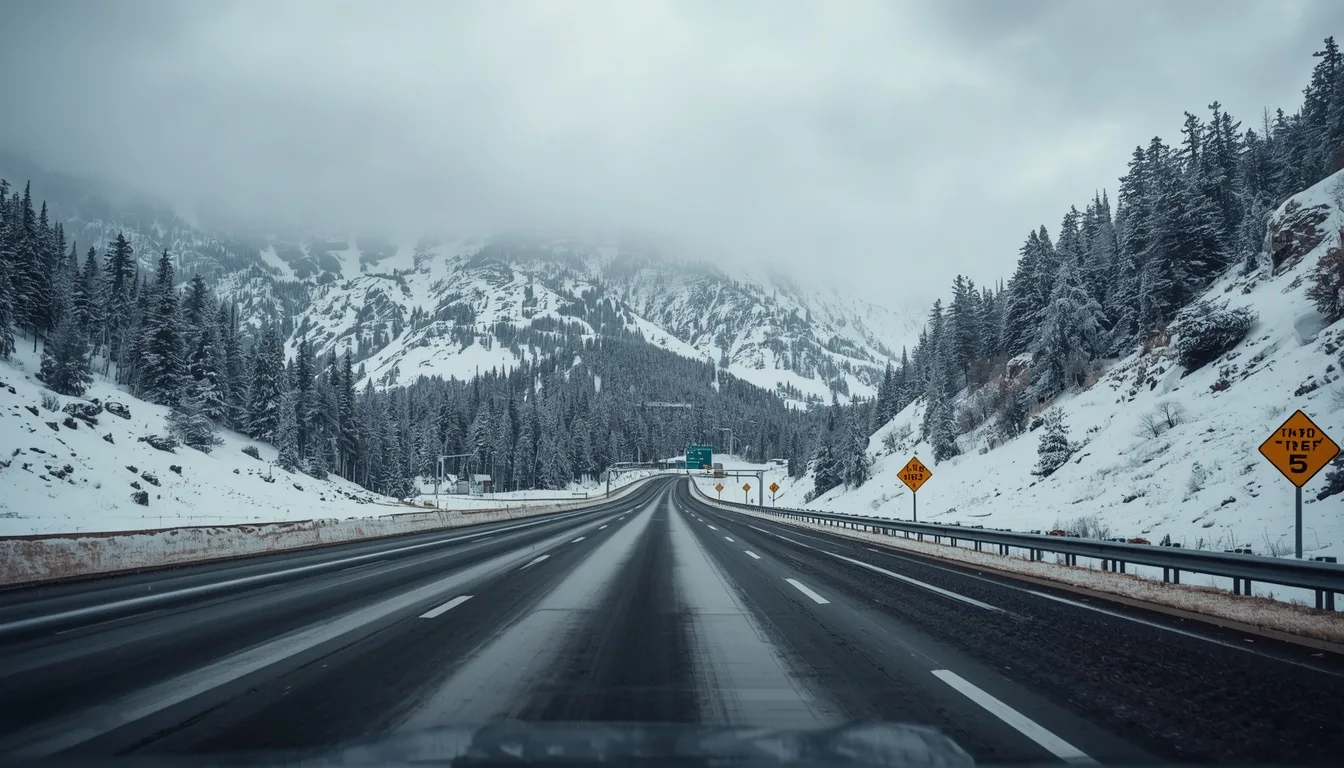
If you drive I-5 south toward California at any point between October and April, Siskiyou Summit is the single most important factor in your winter preparation. At 4,310 feet — the highest point on the entire I-5 system — the summit regularly sees snow and ice when Medford’s valley floor is dry and mild. ODOT can halt traffic at the Ashland chain-up area for screening at any time during winter conditions, and drivers who arrive without compliant traction equipment face fines and may be turned back.
Oregon’s traction tire requirement is stricter than many drivers realize. A mud and snow (M+S) rating alone does not satisfy Oregon law in designated snow zones. Compliant options are studded tires, retractable studded tires, or tires bearing the three-peak mountain snowflake (3PMSF) emblem — a specific certification indicating the tire meets severe snow service standards. All-season tires without the 3PMSF symbol do not qualify. Check your tires for this emblem before the season starts — it is molded into the sidewall next to the M+S marking.
Highway 66 over the Greensprings and Dead Indian Memorial Road both see snow earlier in the season than Siskiyou Summit and have steeper grades that make winter driving more demanding. If you use either route regularly, traction tires are not optional — they are the minimum safe equipment regardless of chain law status on any given day. Check current conditions at TripCheck.com before any mountain route travel from October onward.
Black Ice on Medford Roads: What Locals Know

The Rogue Valley’s winter temperature pattern is a black ice factory. Daytime temperatures in November through February regularly reach the mid-40s to low 50s — warm enough to melt overnight frost and allow rain. Nighttime temperatures frequently drop to the mid-20s to low 30s. Any moisture on the road surface from afternoon rain or snowmelt freezes overnight into a nearly invisible layer. The NWS Medford office issues black ice advisories regularly throughout winter precisely because this pattern repeats so consistently.
Medford drivers learn which specific locations freeze first. I-5 overpasses and bridge decks throughout the valley — including the viaduct through downtown Medford — freeze before ground-level road sections because cold air circulates underneath. Bear Creek Drive in shaded sections near the creek stays icy longer into the morning than nearby roads. Low-lying areas near the Rogue River and Bear Creek see ground fog that deposits moisture on road surfaces overnight. If the overnight low is near or below freezing, treat these locations as potentially icy until mid-morning regardless of how the road looks.
What Winter Does to Your Vehicle’s Paint and Body
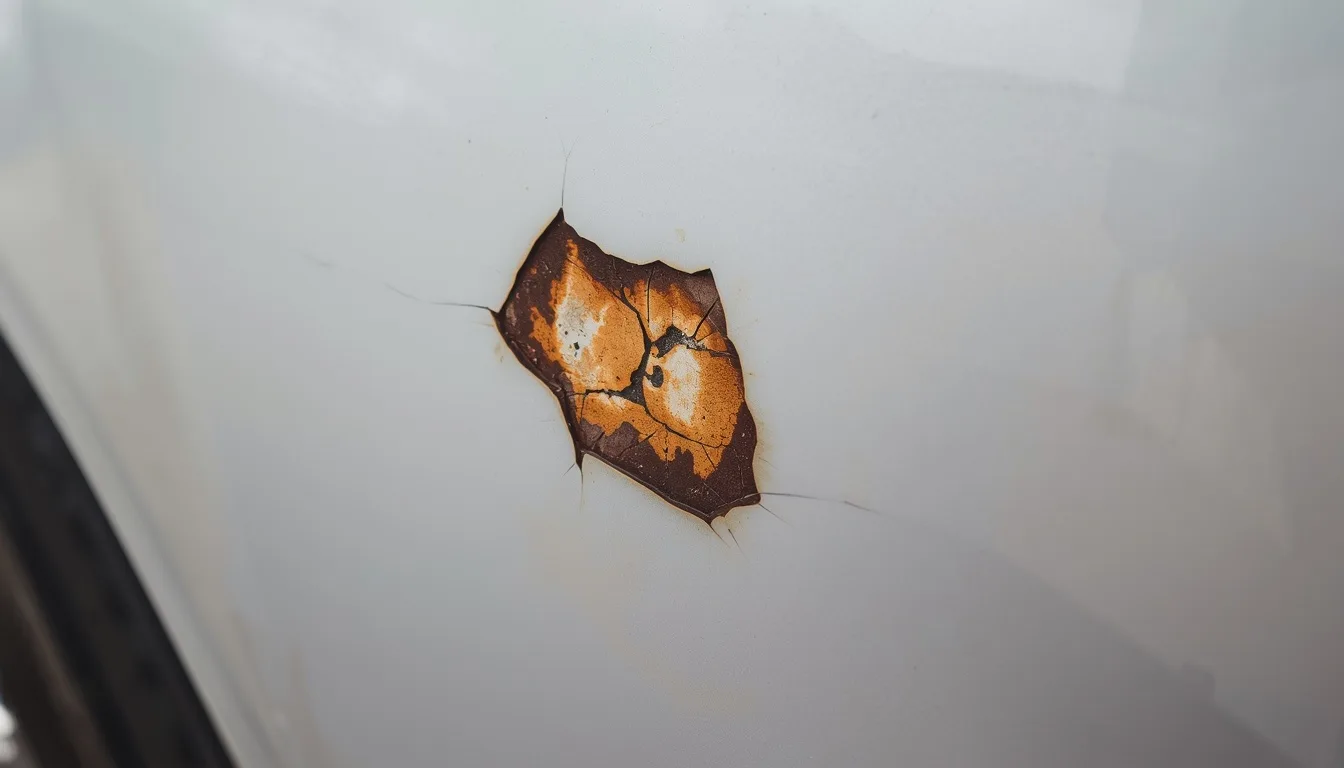
Southern Oregon’s transition from wildfire ash season to winter rain creates a specific paint hazard that most vehicle owners never consider. Ash from summer and fall fires settles into paint scratches and chips throughout the season. When the first rains arrive in October and November, that ash — which is mildly acidic — gets driven into the damage before washing away. Any paint chip that exposed bare metal during ash season has had months of slow acid exposure before winter moisture arrives to accelerate rust formation.
Road treatment materials compound the problem. ODOT applies sand and liquid de-icing treatments to I-5 and mountain passes throughout winter. These materials reach the undercarriage and lower body panels of vehicles that travel these routes, and they accelerate corrosion in any area where paint protection has been compromised. A rock chip from a summer Highway 62 trip to Crater Lake that was minor in August can develop visible rust by February if it goes untreated through the winter.
The Rogue Valley’s freeze-thaw cycle — which we discussed in our Rogue Valley road hazards guide — also expands existing paint damage faster than in consistently cold climates. Moisture penetrates chips and scratches, freezes overnight, and expands the damage slightly. Repeat this cycle over 90-120 days of winter and a small chip can become a spreading rust spot. The fix is straightforward: address any paint chips that reach bare metal before the first significant rains. A professional repair seals the metal correctly. Even a DIY touch-up coat is better than leaving bare metal exposed heading into winter.
The Rogue Valley Winter Vehicle Checklist

Southern Oregon winter preparation is more comprehensive than putting on snow tires. The Rogue Valley’s specific conditions — mountain pass requirements, freeze-thaw paint damage, black ice patterns, and wildfire ash transition — create a checklist that goes beyond what a standard oil change shop covers.
Start with tires. Check tread depth — anything below 4/32 inch is inadequate for wet winter roads, and below 2/32 is legally worn out. Check the sidewalls for the 3PMSF emblem if you travel I-5 south or any mountain route. Check tire pressure — cold temperatures reduce pressure roughly one PSI per 10 degrees of temperature drop, so tires that were properly inflated in September will be underinflated by December.
Battery condition is critical. Cold temperatures reduce battery capacity — a battery that starts your car fine in September may not have enough reserve capacity to start it on a cold January morning. If your battery is more than three years old, have it tested before winter. A battery failure on a cold morning in Medford is an inconvenience; a battery failure at Siskiyou Summit in a snowstorm is a genuine emergency.
Replace wiper blades before the rainy season starts — October is the right time in the Rogue Valley. Use winter-rated washer fluid that will not freeze in the reservoir or on the windshield. Check brake pad thickness, since wet and icy roads demand more from brakes than dry summer conditions. Make sure all lights are functioning — shorter days and the Rogue Valley’s fog events make proper lighting essential for visibility.
Finally, address any paint damage from the summer and fall. Chips that reach bare metal need sealing before winter moisture and road treatments accelerate rust. This is the most commonly skipped winter prep step for Medford drivers, and it is the one that generates the most preventable body repair work we see in spring.
Free Pre-Winter Assessment at Rogue Auto Body
At Rogue Auto Body in Medford, we see the results of skipped winter prep every spring — rust spots that started as summer rock chips, paint damage that spread through winter freeze-thaw cycles, and body damage from winter collisions that could have been avoided with better-prepared vehicles. We offer free damage assessments to identify paint and body issues that need attention before winter, and we can give you an honest evaluation of what needs professional repair versus what a DIY touch-up coat can handle.
Stop by before the first rains hit — October and early November are the right window for Medford. Visit our collision repair and paint services page or call (541) 770-2557. We are at 943 Automation Way Suite K, Medford, OR 97504. For current pass conditions and chain law status throughout the winter, bookmark TripCheck.com — it is the most reliable real-time source for I-5 and Southern Oregon mountain route conditions.