
Paintless dent repair vs traditional body work is one of the most common questions we hear at Rogue Auto Body, and it makes sense. When someone spots a door ding in a parking lot or finds hail damage after a storm, the first instinct is to wonder whether this is a quick, inexpensive fix or whether it means paint, filler, and a week in the shop. The honest answer depends on the specific damage, and choosing the wrong method either costs more than necessary or leaves a repair that does not hold up. Here is how to tell the difference.
How Paintless Dent Repair Works
Paintless dent repair, or PDR, is exactly what the name suggests. A trained technician gains access to the backside of the damaged panel and uses a set of specialized metal rods and picks to massage the dent outward, slowly and precisely restoring the original contour of the metal. The process takes patience and skill. The technician works in small increments, reading the surface with a light board to track progress, until the panel is flat again.
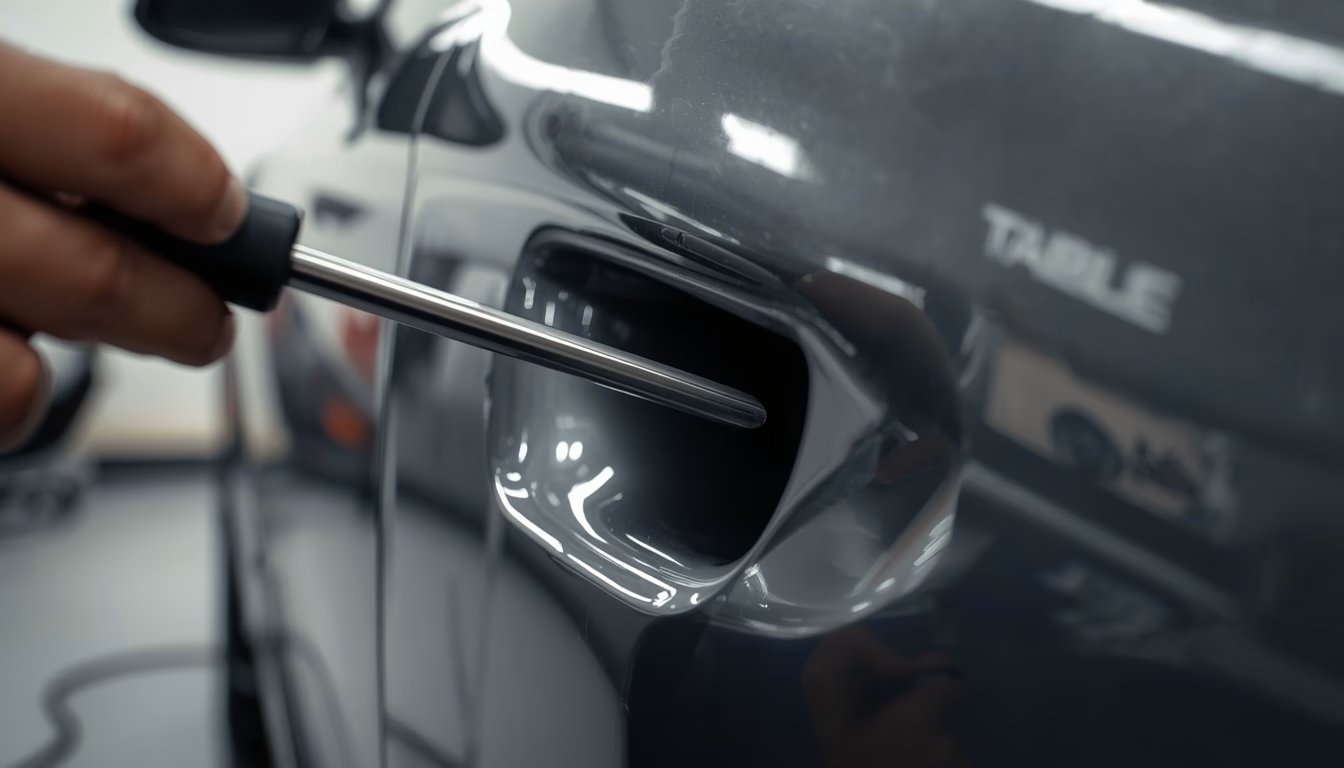
Because PDR never touches the paint surface, the factory finish is fully preserved. No sanding, no filler, no primer, no color match. What comes off the assembly line stays on your car. For vehicles with a modern clear coat finish, this matters more than it used to. Factory paint is applied in a controlled environment with consistent thickness and adhesion. Even the best body shop repaint, matched as closely as possible, introduces a variation that a trained eye can detect under the right lighting. PDR eliminates that variable entirely.
What Makes a Dent a Good PDR Candidate
Not every dent qualifies for paintless repair. The method has real limits, and understanding them saves time and sets accurate expectations. PDR works when three conditions are met: the paint is intact, the metal has not been stretched or creased sharply, and the technician can physically access the back of the panel.
Paint integrity is the most obvious condition. If the impact cracked, chipped, or scratched through to the primer or bare metal, the paint will need to be refinished regardless of what happens to the metal underneath. In that case, you are already doing traditional body work, and PDR only addresses one part of the repair.
Metal deformation matters just as much. A round or oval dent, like the kind a hailstone or a shopping cart handle leaves, can typically be massaged back because the metal has been pushed inward without tearing or folding. A sharp crease, the kind left by a collision with a parking structure corner or another vehicle, permanently distorts the grain of the steel and cannot be pushed back to its original shape without filler. Stretched metal, where an impact has forced the metal to expand beyond its original surface area, also cannot be restored to flat without correction.
Access is the third variable. PDR tools need room to work behind the panel. Open panels like hoods, roofs, and door skins generally provide access through existing openings or removable trim. Dents near a body line, a panel edge, a structural reinforcement, or a weld seam may not have enough clearance for the tools, or the metal may be too rigid to move without risking cracking the paint from the inside. A qualified technician will assess access before committing to PDR.
How Traditional Body Work Handles What PDR Cannot
Traditional body work is the appropriate repair method when the damage falls outside what PDR can restore. The process starts with metal work: straightening what can be straightened and roughing in the shape of the panel. Then body filler, sometimes called Bondo though that is just one brand name, is applied to bridge the remaining irregularities, feathered smooth, and sanded to match the contour of the surrounding metal. Primer seals the repair, and then the panel goes into the paint booth for color application and clear coat.
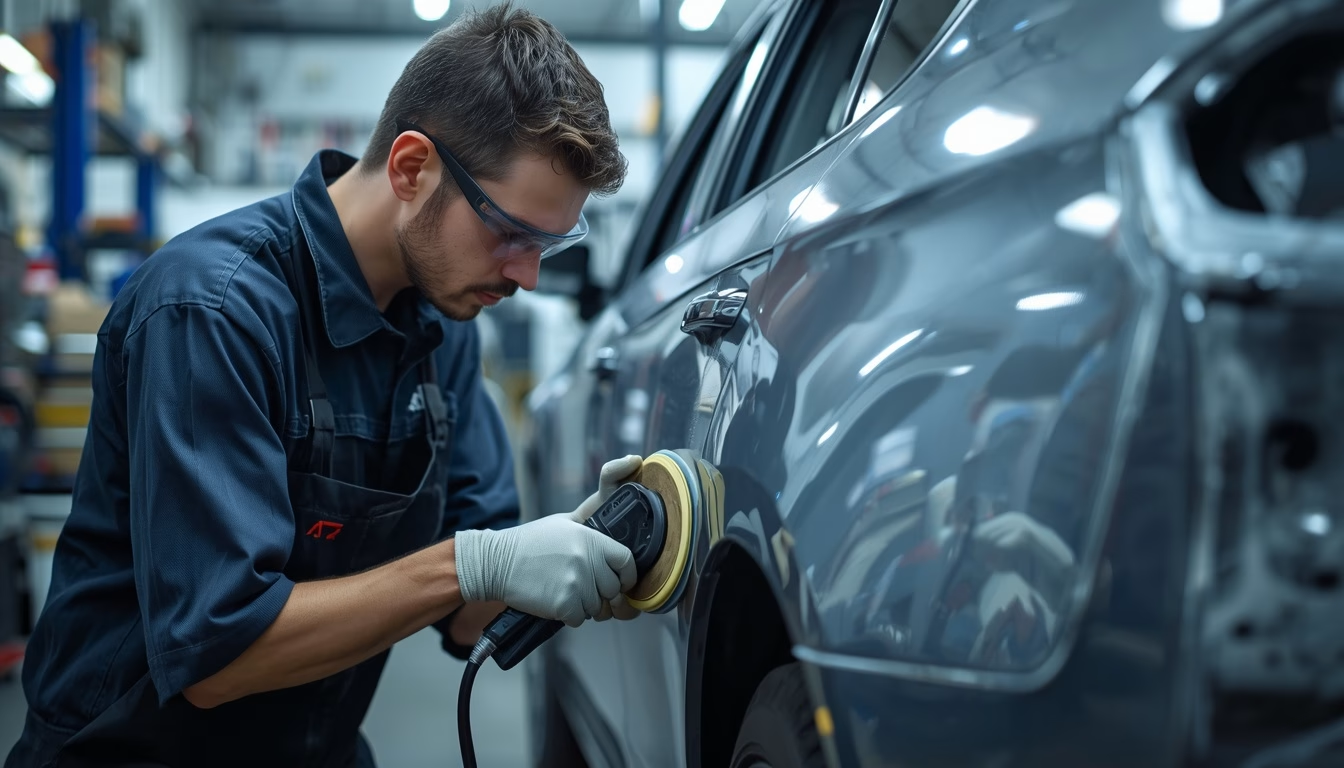
The repaint step is where skill matters most. A color match on a vehicle that has been on the road for several years is not as simple as looking up the factory paint code. Paint fades and oxidizes over time, and the rate varies by panel exposure and climate. A good color specialist samples the adjacent panels and adjusts the mix to account for that variance before laying down the first coat. At Rogue Auto Body we use GFS paint booths with controlled airflow and pressure, and our technicians are BASF certified color specialists, which means the blend is done right rather than settled for.
The full traditional repair process takes longer than PDR. Filler needs to cure before it can be sanded. Primer needs to flash before paint goes on. Paint needs time to set before clear coat. A proper repair cannot be rushed without compromising adhesion or finish quality, which is why a traditional body repair typically takes several days from drop-off to pickup.
Hail Damage: Where PDR Earns Its Reputation
Hail damage is the scenario where PDR is almost always the correct first choice, assuming the paint held. Hailstones leave round, shallow dents across large surface areas, often hitting a hood, roof, and trunk lid in the same storm. That pattern is exactly what PDR was designed to handle efficiently. A traditional repair on a hail-damaged vehicle would require filling, priming, and refinishing every affected panel, which is expensive, time-consuming, and introduces the paint variation issue across multiple large surfaces.
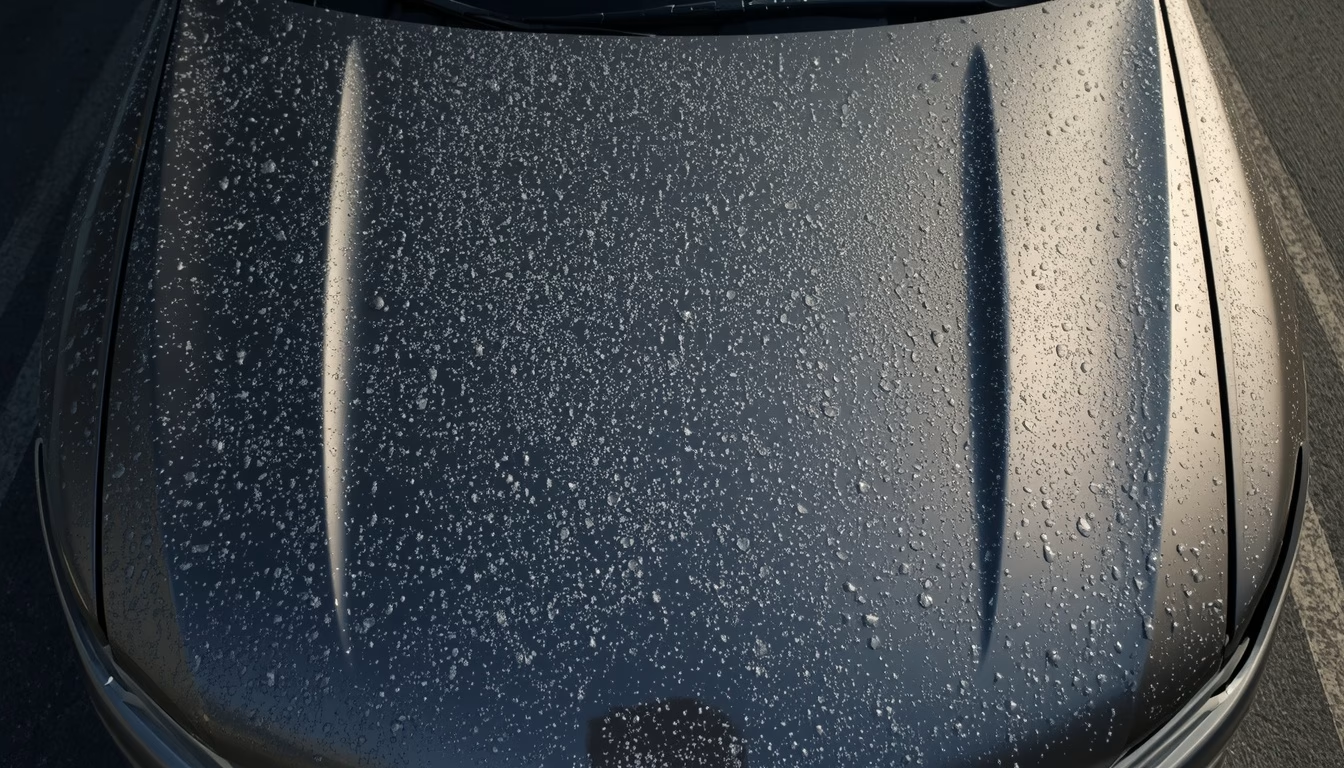
With PDR, a hail-damaged vehicle can often be returned to pre-storm condition in one to two days with factory paint intact. The cost is significantly lower than a traditional repair, which means comprehensive insurance claims for hail frequently come in under the deductible threshold or close to it. We document the damage with photos and work directly with your insurance adjuster to ensure the estimate reflects the full scope of what needs to be corrected, not just what is visible from one angle.
How We Decide at Rogue Auto Body
When a vehicle comes in with dent damage, our technicians look at the same three factors: paint condition, metal condition, and access. If all three conditions favor PDR, we recommend it because it is faster, less expensive, and preserves the factory finish. If any of the three conditions fall outside PDR’s range, we recommend traditional repair, explain why, and give an accurate estimate for both the metalwork and the refinishing.
Some repairs are a combination of both. A vehicle that came through a hailstorm with mostly clean dents but one larger impact near a body line might be a PDR candidate on eighty percent of the damage and a traditional repair on the rest. We handle both in house, which means the job stays in one place and the quality is consistent across the whole vehicle.
If you have dent damage and are not sure what type of repair applies, the most useful thing you can do is bring the vehicle in for a free estimate. A visual inspection takes a few minutes and tells you immediately whether PDR is viable. Visit our collision repair services page for more on what we offer, or call us at (541) 770-2557. We are at 943 Automation Way Suite K, Medford, OR 97504 and serve the full Rogue Valley.