
Getting a collision repair estimate is one of the first steps after an accident, but most people hand it back to the service advisor without fully understanding what they just agreed to. That is not a criticism — estimates are written in industry shorthand, and no one teaches you how to read one. This guide walks through each section in plain language so you know what you are looking at, what to question, and how to tell the difference between a thorough estimate and one that left things out.
What an Estimate Actually Contains

A collision repair estimate is a line-by-line breakdown of everything required to restore your vehicle. It is organized by damaged area, and each area lists the parts needed, the labor hours to repair or replace them, and the cost of paint and materials. Here is what each section means.
Labor is billed in hours and covers the technician time to remove, repair, or replace each part. Labor rates vary by shop and reflect overhead, equipment, and technician certification level. An I-CAR Gold Class shop like Rogue Auto Body employs technicians trained to manufacturer standards, which is reflected in the labor rate and in the quality of the work. A shop with a significantly lower rate may be cutting costs on training and equipment.
Parts are listed individually for each damaged component. Next to each part you will see a designation: OEM (original equipment manufacturer), aftermarket (third-party manufactured to fit), or recycled (a used part pulled from a salvage vehicle). These are not equivalent choices. OEM parts are made to the exact specifications of your vehicle. Aftermarket parts are manufactured to fit but may not match tolerances, finish, or structural performance. Recycled parts introduce unknown wear history. For a full explanation of the tradeoffs, see our post on OEM vs. Aftermarket vs. Recycled Parts.
Paint and materials covers the cost of primer, paint, clear coat, and the consumable materials used during the refinishing process. This line is calculated based on the panels being painted and the refinish time required. It is not a fixed markup — it reflects actual product cost.
Sublet covers work performed by a specialist outside the shop. Common sublet items include wheel alignment, glass replacement, and ADAS sensor calibration. Sublet charges are passed through at cost or with a small handling fee and represent real work that must happen for a safe, complete repair.
What Blending Means and Why It Matters
Blending is one of the most commonly misunderstood line items on an estimate, and it is sometimes questioned by insurance adjusters as an unnecessary charge. It is not.
When a panel is repainted, the new paint is matched to the vehicle’s current color using a computerized spectrophotometer. But paint on a vehicle fades and oxidizes over time, and that shift varies by panel depending on sun exposure and angle. A perfect color match to the original formula can still look slightly different than the surrounding panels on a vehicle that is two or more years old.
Blending solves this by feathering the new paint into the edge of an adjacent panel, creating a gradual transition that the eye cannot detect. Without blending, you may see a visible color difference at the panel boundary — particularly in direct sunlight or on darker colors. If a shop’s estimate does not include blend charges on adjacent panels, ask why. The answer will tell you something about how they approach quality.
The Supplement: Why Your Final Bill May Be Higher Than the Estimate
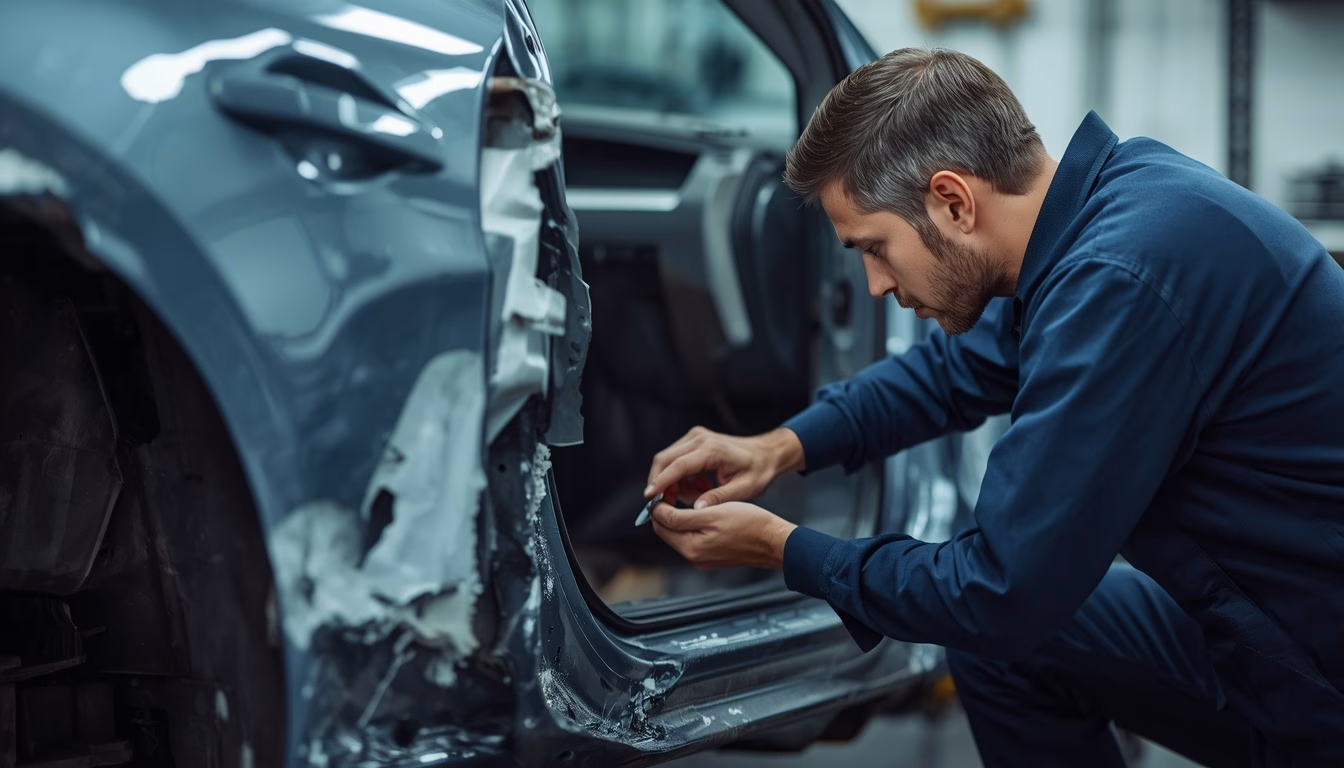
An estimate is based on what a technician can see during the initial inspection. Once disassembly begins, hidden damage that was not visible from the outside often appears. Bent inner structure, damaged clips and brackets, compromised mounting points — these are not visible until panels come off. Roughly seventy percent of collision repairs involve at least one supplement.
When additional damage is found, the shop documents it with photographs, writes a supplemental estimate, and submits it to the insurer for approval before proceeding. This is a normal and expected part of the process, not a sign that the original estimate was done poorly. At Rogue Auto Body, we contact you immediately when supplemental damage is found, explain what we found and why it needs to be addressed, and give you an updated timeline before we continue.
A shop that never finds supplemental damage is either working on very simple repairs or is not looking carefully enough. A shop that consistently finds large supplements on straightforward repairs deserves more scrutiny. The right answer is somewhere between those extremes and comes down to whether the shop communicates clearly and documents what they found.
Why the Lowest Estimate Is Often Not the Best Deal
When you are comparing estimates, a significantly lower number is usually a signal, not a savings. Here is what a lower estimate typically reflects.
Aftermarket or recycled parts instead of OEM lower the parts cost but may not fit or perform to factory specification. Skipped blend charges reduce the estimate but result in a visible color difference you will live with every time you look at the car. Underestimated labor hours mean the technician is either working faster than the job requires or the shop will add time later as a supplement. Missing line items — alignment, calibration, corrosion treatment — represent real work that still needs to happen, either at your expense or not at all.
The lowest estimate on paper can easily become the most expensive repair once supplements, corrections, and redo work are added. A complete, transparent estimate from a certified shop is a better starting point than a stripped-down number designed to win the authorization.
Four Questions to Ask Before You Sign
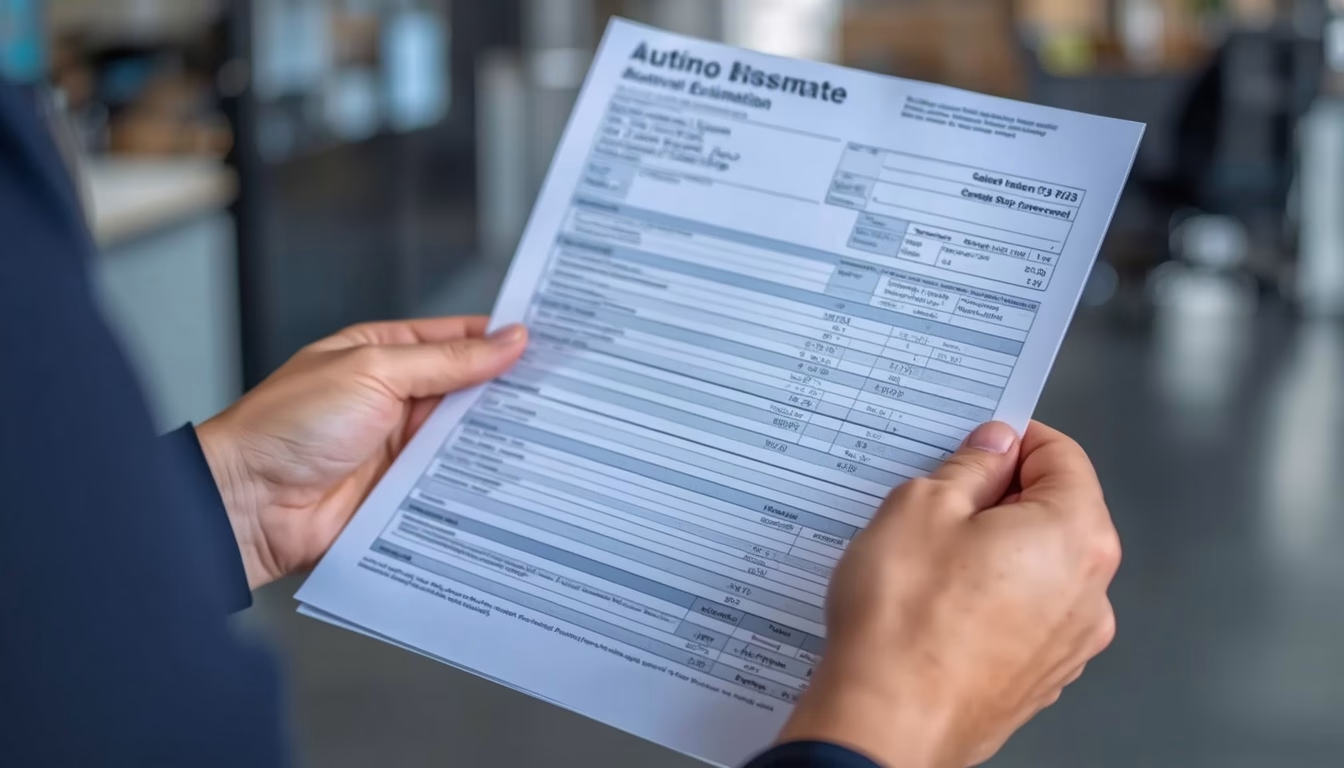
Before approving any estimate, four questions will give you a clear picture of what you are agreeing to.
What type of parts are being used, and why? OEM, aftermarket, and recycled parts each have appropriate uses. Ask which applies to your repair and what the shop’s recommendation is for your specific vehicle and damage. A shop that cannot explain the parts choice clearly is not a shop you want making those decisions for you.
Are blend charges included for adjacent panels? If the answer is no, ask why. There are cases where blending is not needed — a very new vehicle with fresh factory paint, or a panel that does not share a visible seam with an adjacent painted surface. But if the reason is simply cost reduction, that is worth knowing before you sign.
What happens if you find additional damage during disassembly? A good shop has a clear process: document, photograph, contact you, submit the supplement, wait for approval before proceeding. If the answer is vague, that is a red flag for how communication will go once your car is apart and you have less leverage.
What warranty covers this repair? Rogue Auto Body provides an unlimited lifetime warranty on non-wear parts, materials, and labor for every repair we perform. Ask any shop you are considering what their warranty covers and for how long. A shop that does not stand behind its work is telling you something important.
Get an Estimate You Can Actually Understand
At Rogue Auto Body, we walk through every estimate with you before you sign anything. We explain what each line means, what parts we are recommending and why, and what the process looks like from drop-off to delivery. If you have questions at any point — before, during, or after the repair — we answer them directly.
If your vehicle has been in a collision and you want a thorough, transparent estimate from an I-CAR Gold Class certified shop, visit our collision repair services page or call us at (541) 770-2557. We are at 943 Automation Way Suite K, Medford, OR 97504.